Jewelry · July 2026 · 4 min read
The story of the bolo tie
From a hatband in the wind to the official neckwear of three states. A short history of the West's most misunderstood jewel.
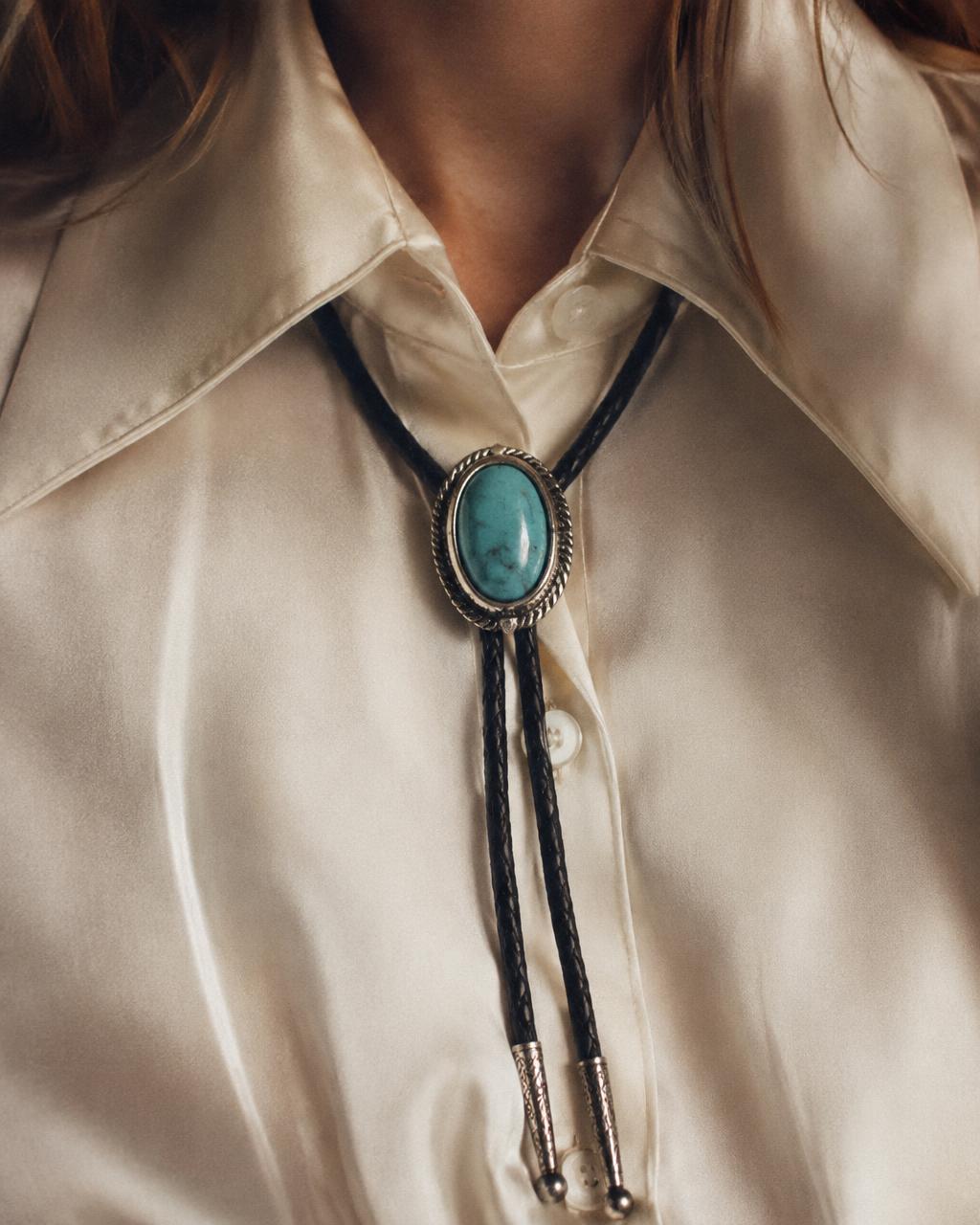
The story goes that Victor Cedarstaff, an Arizona silversmith, was riding in the wind one afternoon in the late 1940s when his hat blew off. He caught the silver-tipped hatband and, rather than lose it, slipped it around his neck. A friend told him that was a nice tie he was wearing.
Whether or not it happened quite that way, the bolo — named for the boleadora, the Argentine throwing weapon — became the West's answer to the necktie. Arizona made it official neckwear in 1971. New Mexico and Texas followed.
The great ones were made by Navajo, Zuni and Hopi silversmiths in the fifties and sixties: heavy sterling slides with a single stone, or an inlaid scene, on a braided leather cord.
Worn today, loosely over a silk blouse, the bolo does something no other piece of jewelry does. It says you know where you are from.
Worn before. Worn again.
Keep reading
Newsletter